
Creating a wildlife-friendly garden doesn't have to mean a complete garden makeover. By providing a few essential resources, you can turn your backyard, balcony or courtyard into a welcoming space for local wildlife.
At Habitat Connection Co., we use five habitat principles to help guide garden design.
1. Food
Plant a variety of flowering natives to provide nectar and pollen, along with species that produce seeds, berries and other food sources. Remember that insects are an important food source for many birds, lizards and other animals, too.
2. Shelter
Dense shrubs, grasses, groundcovers and layers of vegetation give wildlife places to hide, rest and escape from predators. Different animals need different types of shelter, so a mix of plant forms and heights is helpful.
3. Water
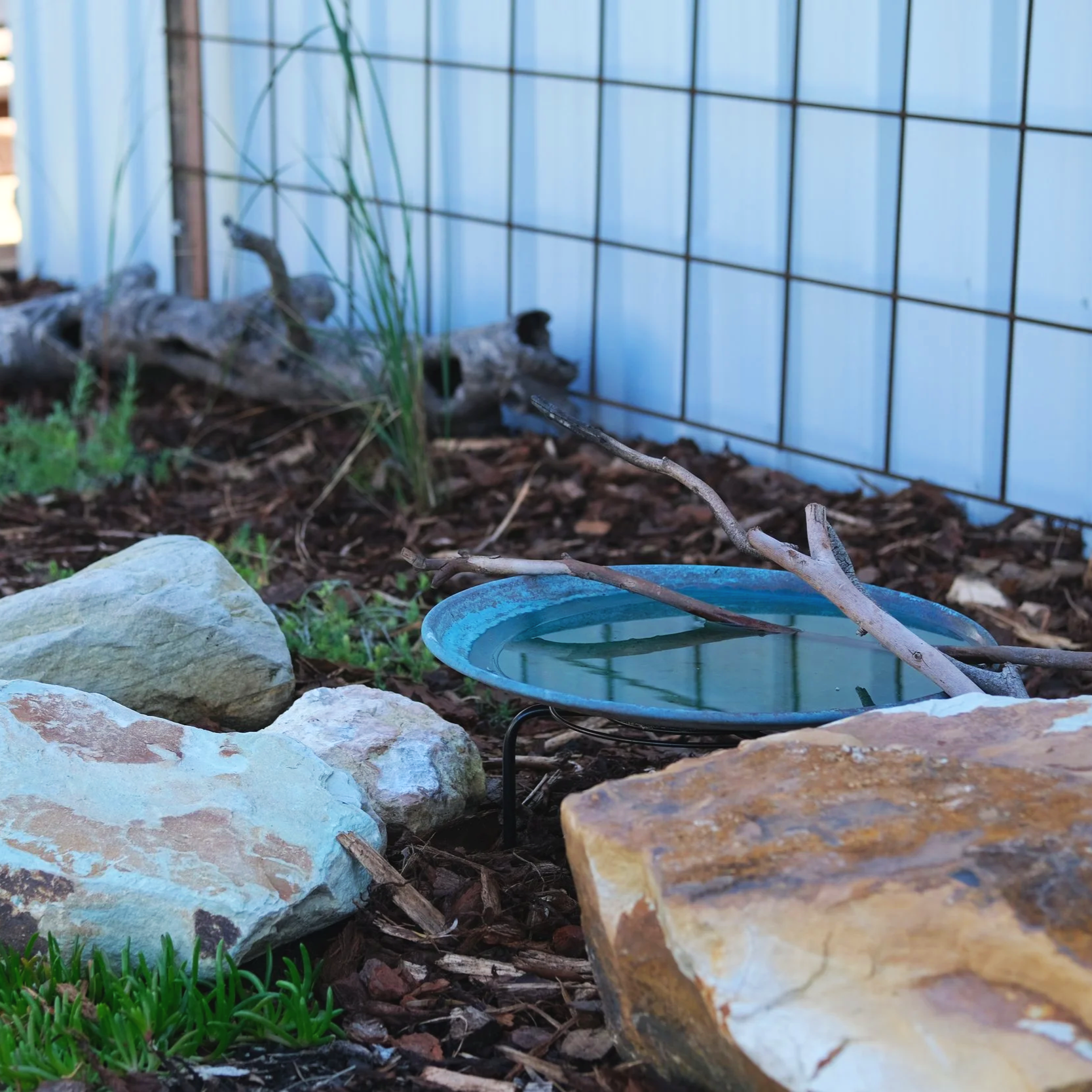
A shallow bird bath or water dish can provide a valuable drink, particularly during hot, dry weather. Add stones or sticks so smaller animals can reach the water safely, and keep it clean and topped up.
4. Nesting opportunities
Mature trees, dense shrubs, tussocky grasses, tree hollows and suitable nesting boxes can provide places for animals to raise their young. Fallen branches and leaf litter also support insects and other small creatures.
5. Safety
Reduce pesticide use, keep pets from disturbing wildlife where possible, and provide connected patches of vegetation that allow animals to move through the garden with less exposure to danger.
Bring the principles together
The most effective habitat gardens provide several of these resources together. A flowering shrub, for example, might offer nectar, shelter and nesting opportunities all in one place.
You don't need a large garden to make a difference. Start with one habitat feature, build on it over time, and let your garden grow into a space that supports both people and wildlife.
