
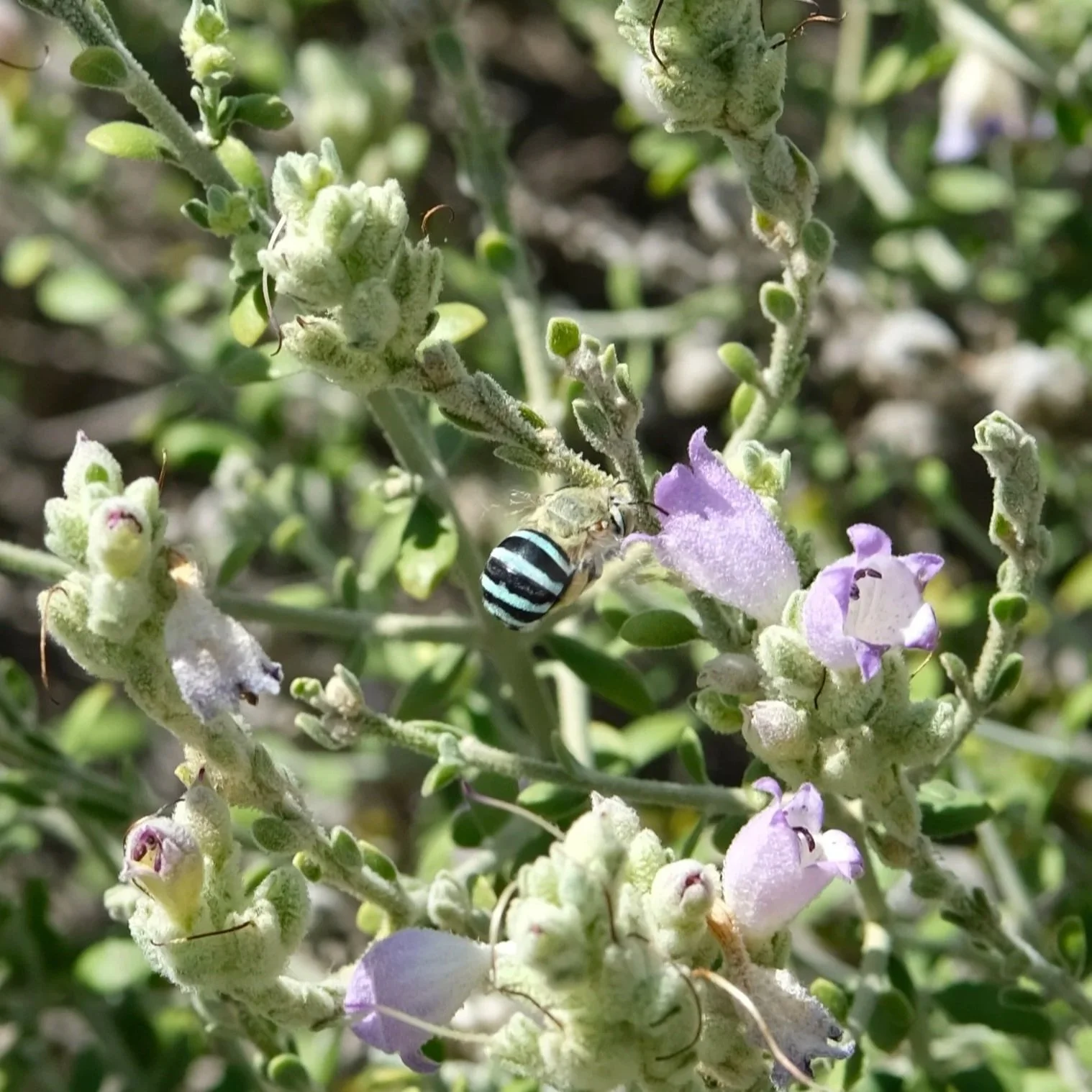
Native bees are some of the most fascinating visitors you can welcome into your garden. Australia is home to around 2,000 described native bee species, ranging from tiny, solitary bees to larger, striking species such as blue-banded bees.
These important pollinators visit flowers to collect nectar and pollen, helping many plants reproduce. With the right plants and a few simple habitat features, your garden can provide valuable resources for them.
Plant for a continuous supply of flowers
Choose a variety of locally appropriate flowering native plants that bloom at different times throughout the year. This helps provide a more reliable supply of nectar and pollen across the seasons.
Different bee species are attracted to different flower shapes and sizes, so diversity matters. Small flowering shrubs, daisies, native peas, correas and other suitable local species can all contribute to a pollinator-friendly garden.
Leave room for nesting
Not all native bees live in hives. Many are solitary and nest in the ground, while others use small hollows in wood or existing cavities.
Leaving some areas of bare, undisturbed soil can support ground-nesting species. Retaining suitable dead wood and natural garden features can also provide nesting opportunities for some cavity-nesting bees.
Avoid unnecessary chemicals
Pesticides can harm native bees and other beneficial insects. Focus on creating a healthy garden with diverse planting, and avoid spraying flowering plants while pollinators are visiting.
Take time to observe
Spend a few minutes watching the flowers in your garden. You might notice tiny, fast-moving bees, metallic green species or blue-banded bees hovering near blooms.
You don't need to build a bee hotel to support native bees. Providing appropriate flowering plants, nesting habitat and a safe place to forage is a great place to start.
